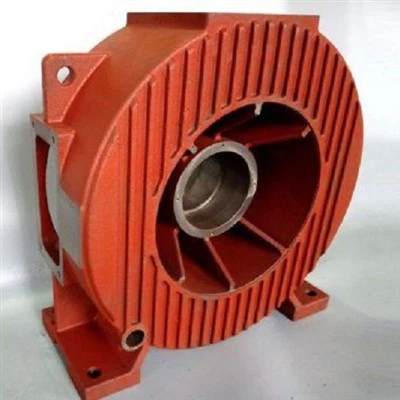
As a dedicated supplier of Sheave End Covers, ensuring the quality of our products is of utmost importance. A thorough inspection for defects is a crucial step in maintaining high - quality standards. In this blog, I will share the step - by - step process of inspecting a new Sheave End Cover for defects.
Visual Inspection
The first and most basic step in the inspection process is a visual check. This involves looking at the Sheave End Cover from all angles to identify any obvious surface defects.
Surface Imperfections
Inspect the surface of the cover for scratches, dents, or cracks. Scratches can weaken the structural integrity of the cover over time, especially if they are deep. Dents may affect the fit and function of the cover, and cracks are a serious defect that can lead to failure during operation.


Check for any signs of corrosion. Corrosion can occur due to exposure to moisture or chemicals, and it can eat away at the material of the cover. This not only affects the appearance but also the durability of the product.
Casting Defects
If the Sheave End Cover is a cast product, look for casting - related defects such as porosity, blowholes, or misruns. Porosity appears as small holes in the material, which can reduce the strength of the cover. Blowholes are larger voids in the casting, often caused by trapped gas during the casting process. Misruns occur when the molten metal does not fully fill the mold cavity, resulting in an incomplete part.
Finish and Coating
Examine the finish of the cover. A smooth and even finish is a sign of a well - made product. Check the coating, if any, for uniformity and adhesion. A poor - quality coating may peel or chip easily, leaving the cover vulnerable to corrosion and wear.
Dimensional Inspection
Accurate dimensions are essential for the proper fit and function of the Sheave End Cover. Use precision measuring tools such as calipers, micrometers, and gauges to measure the key dimensions of the cover.
Outer and Inner Diameters
Measure the outer and inner diameters of the cover. Any deviation from the specified dimensions can cause problems with the installation and operation of the sheave. For example, if the outer diameter is too large, it may not fit properly in the housing, while a smaller - than - specified inner diameter can cause interference with the sheave shaft.
Thickness
Measure the thickness of the cover at various points. Consistent thickness is important for maintaining the structural integrity of the cover. Uneven thickness can lead to stress concentrations and potential failure.
Hole Sizes and Spacing
If the cover has holes for bolts or other fasteners, measure the hole sizes and their spacing. Incorrect hole sizes can make it difficult or impossible to install the cover, and improper spacing can result in misalignment.
Material Inspection
The quality of the material used in the Sheave End Cover is critical. Different materials have different properties, and choosing the right one is essential for the performance and longevity of the cover.
Material Type
Verify the material type of the cover. Common materials for Sheave End Covers include cast iron, steel, and aluminum. Each material has its own advantages and disadvantages. For example, Cast Iron Counterweight is known for its high strength and wear resistance, while aluminum is lightweight and corrosion - resistant.
Material Hardness
Test the hardness of the material. Hardness is an important property that affects the wear resistance and durability of the cover. Use a hardness tester to measure the hardness at different points on the cover. A consistent hardness level indicates a uniform material quality.
Chemical Composition
Analyze the chemical composition of the material. This can be done through methods such as spectroscopy. The correct chemical composition is necessary to ensure the material has the desired properties. For example, the presence of certain elements in the right proportions can enhance the strength and corrosion resistance of the cover.
Functional Inspection
After the visual, dimensional, and material inspections, it's time to perform a functional inspection to ensure the cover performs its intended function.
Fit and Assembly
Check how the Sheave End Cover fits onto the sheave. It should fit snugly without any excessive play or interference. Try to assemble the cover with the other components of the sheave system, such as the Traction Machine Housing or Elevator Traction Machine Housing. Ensure that all the holes align properly and the bolts can be tightened without any difficulty.
Rotation and Movement
If the cover is part of a rotating system, test the rotation. The cover should not cause any obstruction or excessive friction during rotation. Check for smooth movement and listen for any abnormal noises. Abnormal noises can indicate a problem with the fit or the material of the cover.
Documentation and Record - Keeping
Throughout the inspection process, it is important to document all the findings. This includes recording any defects, measurements, and test results. Keeping detailed records can help in quality control, traceability, and continuous improvement.
Conclusion
Inspecting a new Sheave End Cover for defects is a comprehensive process that involves visual, dimensional, material, and functional inspections. By following these steps, we can ensure that our Sheave End Covers meet the highest quality standards.
If you are in the market for high - quality Sheave End Covers or have any questions about our inspection process, we encourage you to contact us for a purchase discussion. We are committed to providing you with the best products and services.
References
- ASME standards for elevator components
- Manufacturer's guidelines for Sheave End Cover production
- Industry best practices for quality control in elevator parts manufacturing