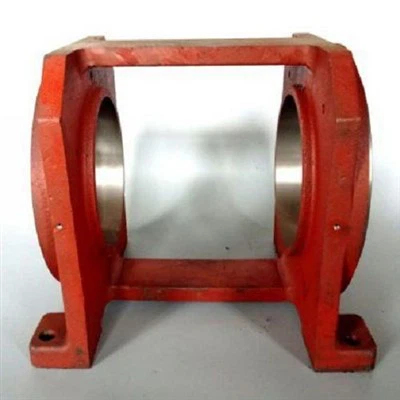
As a supplier of UCP Bearing Housing, I understand the critical role that lubricants play in ensuring the optimal performance and longevity of these components. UCP Bearing Housings are widely used in various industrial applications, and choosing the right lubricant is essential for reducing friction, preventing wear and tear, and maintaining smooth operation. In this blog, I will explore the different types of lubricants suitable for UCP Bearing Housings and provide guidance on making the right choice for your specific needs.
Understanding the Function of Lubricants in UCP Bearing Housings
Before delving into the types of lubricants, it's important to understand their primary functions in UCP Bearing Housings. Lubricants serve several key purposes:
- Reducing Friction: Friction between the bearing and the housing can lead to excessive heat generation, which can cause premature wear and failure. A good lubricant forms a thin film between the moving parts, reducing friction and minimizing heat.
- Preventing Wear: The lubricant acts as a protective barrier, preventing direct metal-to-metal contact between the bearing and the housing. This helps to reduce wear and extend the service life of the components.
- Corrosion Protection: UCP Bearing Housings are often exposed to harsh environments, including moisture and chemicals. A lubricant with corrosion inhibitors can help to protect the housing from rust and corrosion.
- Sealing: Some lubricants can also act as a sealant, preventing contaminants such as dust, dirt, and water from entering the bearing housing.
Types of Lubricants Suitable for UCP Bearing Housings
There are several types of lubricants available for UCP Bearing Housings, each with its own unique properties and applications. The most common types include:
Greases
Greases are the most widely used lubricants for UCP Bearing Housings. They are a semi-solid lubricant consisting of a base oil, a thickener, and various additives. Greases offer several advantages:
- Long-lasting Lubrication: Greases have a higher viscosity than oils, which allows them to stay in place for longer periods of time. This reduces the frequency of lubrication and helps to maintain consistent performance.
- Sealing Properties: Greases can act as a sealant, preventing contaminants from entering the bearing housing. This is particularly important in applications where the housing is exposed to dust, dirt, or water.
- Load-carrying Capacity: Greases have a high load-carrying capacity, making them suitable for applications with heavy loads or high speeds.
When choosing a grease for a UCP Bearing Housing, it's important to consider the following factors:
- Base Oil Viscosity: The viscosity of the base oil determines the grease's ability to flow and lubricate at different temperatures. A higher viscosity is generally recommended for applications with high loads or low speeds, while a lower viscosity is suitable for high-speed applications.
- Thickener Type: The thickener is responsible for holding the base oil in place and giving the grease its semi-solid consistency. Common thickener types include lithium, calcium, and polyurea. Each type has its own unique properties, so it's important to choose the one that is best suited for your application.
- Additives: Additives can enhance the performance of the grease by providing additional protection against wear, corrosion, and oxidation. Some common additives include anti-wear agents, rust inhibitors, and antioxidants.
Oils
Oils are another type of lubricant that can be used in UCP Bearing Housings. They offer several advantages over greases:
- Better Heat Dissipation: Oils have a lower viscosity than greases, which allows them to flow more easily and dissipate heat more effectively. This is particularly important in applications with high temperatures or high speeds.
- Easier to Apply and Remove: Oils can be easily applied and removed from the bearing housing, making them a convenient choice for maintenance.
- Cleaner Operation: Oils generally leave less residue than greases, which can help to keep the bearing housing clean and reduce the risk of contamination.
However, oils also have some disadvantages:
- Shorter Lubrication Interval: Oils have a lower viscosity than greases, which means they tend to leak out of the bearing housing more easily. This requires more frequent lubrication to maintain adequate lubrication levels.
- Lower Load-carrying Capacity: Oils have a lower load-carrying capacity than greases, which makes them less suitable for applications with heavy loads or high speeds.
When choosing an oil for a UCP Bearing Housing, it's important to consider the following factors:


- Viscosity: The viscosity of the oil determines its ability to flow and lubricate at different temperatures. A higher viscosity is generally recommended for applications with high loads or low speeds, while a lower viscosity is suitable for high-speed applications.
- Additives: Additives can enhance the performance of the oil by providing additional protection against wear, corrosion, and oxidation. Some common additives include anti-wear agents, rust inhibitors, and antioxidants.
- Compatibility: It's important to ensure that the oil is compatible with the materials used in the UCP Bearing Housing. Some oils may react with certain metals or plastics, causing damage or reduced performance.
Solid Lubricants
Solid lubricants are a type of lubricant that consists of a solid material, such as graphite, molybdenum disulfide, or polytetrafluoroethylene (PTFE). They offer several advantages:
- High Temperature Resistance: Solid lubricants can withstand high temperatures without melting or breaking down, making them suitable for applications with extreme heat.
- Low Friction Coefficient: Solid lubricants have a low friction coefficient, which can help to reduce wear and improve the efficiency of the UCP Bearing Housing.
- Chemical Resistance: Solid lubricants are resistant to many chemicals, which makes them suitable for applications where the housing is exposed to harsh environments.
However, solid lubricants also have some disadvantages:
- Limited Lubrication Capacity: Solid lubricants have a limited lubrication capacity compared to greases or oils, which means they may need to be reapplied more frequently.
- Difficult to Apply: Solid lubricants can be difficult to apply evenly, which may result in uneven lubrication and reduced performance.
When choosing a solid lubricant for a UCP Bearing Housing, it's important to consider the following factors:
- Type of Solid Lubricant: Different types of solid lubricants have different properties and applications. It's important to choose the one that is best suited for your specific needs.
- Application Method: Solid lubricants can be applied in various ways, such as spraying, brushing, or dipping. It's important to choose the application method that is most appropriate for your application.
- Compatibility: It's important to ensure that the solid lubricant is compatible with the materials used in the UCP Bearing Housing. Some solid lubricants may react with certain metals or plastics, causing damage or reduced performance.
Factors to Consider When Choosing a Lubricant
When choosing a lubricant for a UCP Bearing Housing, it's important to consider the following factors:
- Operating Conditions: The operating conditions of the UCP Bearing Housing, such as temperature, speed, load, and environment, will determine the type of lubricant that is most suitable. For example, a high-temperature application may require a lubricant with a high melting point, while a wet or corrosive environment may require a lubricant with corrosion inhibitors.
- Compatibility: It's important to ensure that the lubricant is compatible with the materials used in the UCP Bearing Housing. Some lubricants may react with certain metals or plastics, causing damage or reduced performance.
- Lubrication Method: The lubrication method used will also affect the choice of lubricant. For example, a grease lubrication system may require a different type of grease than an oil lubrication system.
- Maintenance Requirements: The maintenance requirements of the UCP Bearing Housing, such as the frequency of lubrication and the ease of lubricant application and removal, should also be considered when choosing a lubricant.
Conclusion
Choosing the right lubricant for a UCP Bearing Housing is essential for ensuring optimal performance and longevity. Greases are the most widely used lubricants for UCP Bearing Housings, but oils and solid lubricants can also be used in certain applications. When choosing a lubricant, it's important to consider the operating conditions, compatibility, lubrication method, and maintenance requirements of the UCP Bearing Housing. By selecting the right lubricant and following the manufacturer's recommendations for lubrication, you can help to extend the service life of your UCP Bearing Housings and reduce the risk of premature failure.
If you are in the market for UCP Bearing Housings or need advice on choosing the right lubricant for your application, please feel free to contact us. We are a leading supplier of UCP Bearing Housings and can provide you with high-quality products and expert advice. You can also explore our other Industrial Gears, Cast Iron Gearbox Housing, and Mechanical Enclosure products to meet your industrial needs.
References
- "Bearing Lubrication Basics," SKF Group.
- "Lubrication Guide for Rolling Bearings," Timken Company.
- "Grease Selection Guide," Mobil Industrial Lubricants.