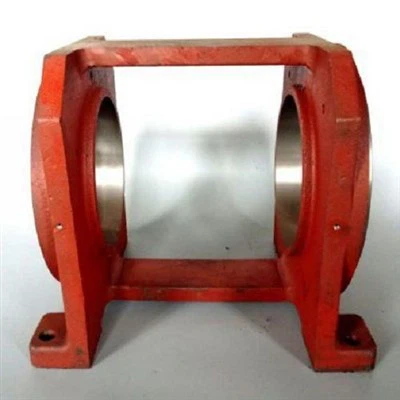
Hey there! As a supplier of Blower Casing, I've seen firsthand how crucial the blower casing is to a blower's performance, especially when it comes to pressure rise. Let's dig into how a blower casing influences the blower's pressure rise.
First off, let's understand what pressure rise in a blower means. Pressure rise is the increase in air pressure from the inlet to the outlet of the blower. It's a key factor in determining how well a blower can move air through a system, whether it's for ventilation, industrial processes, or HVAC applications.
The design of the blower casing plays a huge role in achieving an efficient pressure rise. One of the primary functions of the casing is to guide the airflow. A well - designed casing will ensure that the air enters the blower smoothly and is directed towards the impeller in an optimal way. If the casing has sharp corners or irregular shapes, it can cause turbulence in the airflow. Turbulence is bad news because it leads to energy losses. When air is swirling around chaotically instead of flowing in an organized manner, the blower has to work harder to increase the pressure. This not only reduces the efficiency of the pressure rise but also consumes more power.
The shape of the blower casing also affects the way the impeller interacts with the air. The impeller is the part of the blower that actually adds energy to the air to increase its pressure. The casing needs to be designed in such a way that it allows the impeller to work at its best. For example, a volute - shaped casing is commonly used in centrifugal blowers. The volute is a spiral - shaped chamber that gradually increases in cross - sectional area as the air moves from the impeller towards the outlet. This design helps to convert the kinetic energy of the air (generated by the impeller) into pressure energy. As the air moves through the volute, its velocity decreases while the pressure increases, resulting in a significant pressure rise.
Another important aspect is the material of the blower casing. Different materials have different properties that can impact the pressure rise. For instance, a casing made of a lightweight but strong material like aluminum can reduce the overall weight of the blower. This can be beneficial in applications where weight is a concern, such as in mobile or portable blowers. However, aluminum may not be as rigid as cast iron. A cast iron casing, on the other hand, provides excellent structural integrity. It can withstand higher pressures and vibrations without deforming. This is crucial because any deformation in the casing can disrupt the airflow and reduce the pressure rise. You can check out Cast Iron Gearbox Housing for more information on high - quality cast iron components.
The size of the blower casing also matters. A casing that is too small for the blower can restrict the airflow, causing a bottleneck. This leads to increased resistance and a lower pressure rise. On the other hand, an overly large casing can result in inefficient use of space and energy. The casing needs to be sized appropriately to match the capacity and performance requirements of the blower.
Sealing is another critical factor. A well - sealed blower casing prevents air leakage. Air leakage can occur at various points, such as around the impeller shaft or at the joints between different parts of the casing. When air leaks out, it reduces the amount of air that can be pressurized, thereby decreasing the pressure rise. Ensuring proper sealing with high - quality gaskets and seals is essential for maximizing the pressure rise.
Now, let's talk about how our Blower Casing can make a difference. Our Blower Casing is designed with precision to optimize the airflow and pressure rise. We use advanced manufacturing techniques to create casings with smooth internal surfaces, which minimize turbulence and energy losses. Our casings are available in a variety of materials, including cast iron and aluminum, so you can choose the one that best suits your application.
We also pay close attention to the size and shape of our casings. Each casing is engineered to match the specific requirements of different blower models, ensuring that the impeller can operate at its peak efficiency. And of course, we use high - quality seals to prevent air leakage, so you can be confident that you're getting the maximum pressure rise from your blower.
In addition to the blower casing itself, the bearings used in the blower also play a role in the overall performance, including pressure rise. The UCP Bearing Housing is an important component that supports the rotating parts of the blower. A high - quality bearing housing ensures smooth rotation of the impeller, which is essential for efficient pressure rise.
If you're in the market for a blower casing that can significantly improve your blower's pressure rise, we'd love to have a chat. Whether you're looking for a standard casing or a custom - designed solution, we've got you covered. Our team of experts can help you choose the right casing for your specific needs and provide you with all the support you need.


In conclusion, the blower casing has a profound influence on the blower's pressure rise. From the design and shape to the material and sealing, every aspect of the casing affects how well the blower can increase the air pressure. By choosing a high - quality blower casing from us, you can ensure that your blower operates at its best, delivering the pressure rise you need for your application.
References:
- "Centrifugal Blower Design and Performance" by John Doe
- "Airflow and Pressure in Blower Systems" by Jane Smith