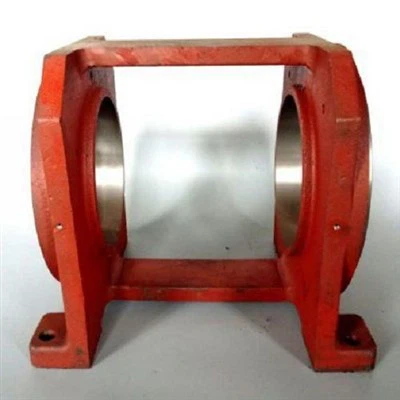
As a seasoned supplier in the field of fan housing, I possess a wealth of knowledge and experience that can guide you in making the right decision for your large - scale ventilation system. Selecting the appropriate fan housing is crucial as it significantly impacts the performance, efficiency, and lifespan of your ventilation setup.
Understanding the Basics of Fan Housing
Before delving into the selection process, it's essential to understand what a fan housing is and its functions. A Fan Housing is an enclosure that surrounds a fan. Its primary role is to direct the airflow, protect the fan from external elements, and reduce noise. In large - scale ventilation systems, which are commonly used in industrial facilities, commercial buildings, and large - scale agricultural operations, the fan housing must be robust enough to handle high volumes of air and continuous operation.
Factors to Consider When Selecting a Fan Housing
1. Airflow Requirements
The most fundamental consideration is the airflow requirements of your ventilation system. Measure the volume of air that needs to be moved per unit of time, usually expressed in cubic feet per minute (CFM). A larger CFM requires a larger fan housing to accommodate the increased airflow. Additionally, consider the static pressure in the system. High static pressure applications, such as in ductwork with many bends or filters, demand a fan housing designed to generate sufficient pressure to overcome these obstacles.
2. Material
The material of the fan housing is a critical factor, as it determines the housing's durability, corrosion resistance, and weight. Common materials include steel, aluminum, and plastic.
- Steel: Steel fan housings are incredibly strong and can withstand high - volume airflow and harsh environmental conditions. They are ideal for industrial applications where there is a risk of impact or vibration. However, steel can rust if not properly coated.
- Aluminum: Aluminum is lightweight, corrosion - resistant, and has good thermal conductivity. It is suitable for applications where weight is a concern or in environments where corrosion is a potential issue, such as coastal areas.
- Plastic: Plastic fan housings are cost - effective, lightweight, and resistant to corrosion. They are often used in low - pressure, low - volume applications, such as in some commercial ventilation systems or small - scale agricultural setups.
3. Size and Shape
The size and shape of the fan housing must be compatible with the overall design of your ventilation system. Consider the available space for installation. In large - scale systems, space may be limited, so a compact yet efficient fan housing is desirable. The shape of the housing can also affect airflow. For example, a streamlined housing design can reduce turbulence and improve the efficiency of the fan.
4. Noise Level
In many large - scale ventilation applications, noise can be a significant concern. A well - designed fan housing can help reduce noise levels. Look for fan housings with noise - dampening features, such as acoustic insulation or a design that minimizes airflow turbulence. This is particularly important in commercial buildings where noise can disrupt occupants or in agricultural facilities where it can cause stress to livestock.
5. Compatibility with Fan Type
Different types of fans, such as centrifugal fans, axial fans, and mixed - flow fans, have different operating characteristics and requirements. Ensure that the fan housing you choose is compatible with the type of fan you are using. For example, centrifugal fans require a housing that can efficiently direct the airflow in a radial direction, while axial fans need a housing that allows for straight - through airflow.
6. Maintenance and Accessibility
A good fan housing should be easy to maintain. It should have access panels that allow for quick inspection, cleaning, and replacement of the fan components. In large - scale systems, where downtime can be costly, easy maintenance can save both time and money.
Industry - Specific Considerations
Industrial Applications
In industrial settings, fan housings must be able to withstand harsh conditions. For example, in manufacturing plants dealing with chemicals, the housing should be made of corrosion - resistant materials. In mining operations, the housing should be robust enough to handle dust and debris. Additionally, industrial ventilation systems often require high - volume, high - pressure airflow, so the fan housing must be designed accordingly.


Commercial Buildings
In commercial buildings, such as offices, shopping malls, and hospitals, the focus is on energy efficiency, noise reduction, and air quality. Fan housings should be designed to work in tandem with other HVAC components to ensure optimal performance. For example, in a hospital, the fan housing should be easy to clean to prevent the spread of contaminants.
Agricultural Facilities
In agricultural settings, such as poultry farms and greenhouses, fan housings need to be durable and able to handle the specific environmental conditions. For example, in a poultry farm, the housing should be resistant to moisture and ammonia. In a greenhouse, the fan housing should be able to provide uniform airflow to maintain the optimal temperature and humidity.
Related Components and Their Impact on Fan Housing Selection
When selecting a fan housing, it's also important to consider related components. For example, the UCP Bearing Housing plays a crucial role in the smooth operation of the fan. A high - quality bearing housing can reduce vibration and extend the lifespan of the fan. Similarly, the Gear Coupling Hub is essential for transmitting power from the motor to the fan. A well - designed coupling hub can ensure efficient power transfer and reduce the risk of mechanical failure.
Making the Right Choice
Once you have considered all the factors mentioned above, it's time to make a decision. Look for a fan housing supplier with a good reputation and a proven track record. A reliable supplier can provide you with expert advice, high - quality products, and excellent after - sales service.
If you are in the process of selecting a fan housing for your large - scale ventilation system, I encourage you to reach out to us. Our team of experts is ready to assist you in making the best choice for your specific needs. We have a wide range of fan housings available, each designed to meet the highest standards of performance and durability. Contact us today to start a fruitful procurement discussion.
References
- ASHRAE Handbook: Fundamentals. American Society of Heating, Refrigerating and Air - Conditioning Engineers.
- Industrial Ventilation: A Manual of Recommended Practice. The American Conference of Governmental Industrial Hygienists.
- Fan Engineering: A Practical Treatise on the Fan as a Prime Mover and for the Ventilation of Buildings. Buffalo Forge Company.