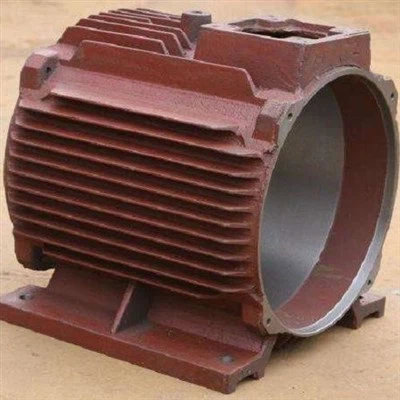
As a supplier of blower casings, I've had the privilege of diving deep into the world of their design principles. Blower casings are more than just enclosures; they're crucial components that can make or break the performance of a blower system. In this blog, I'll share some key design principles that we keep in mind when crafting these essential parts.
Aerodynamic Efficiency
One of the most important design principles for a blower casing is aerodynamic efficiency. The casing needs to guide the airflow smoothly through the blower, minimizing turbulence and pressure losses. When air moves smoothly, the blower can operate more efficiently, using less energy to achieve the desired airflow.
To achieve good aerodynamics, we pay close attention to the shape of the casing. A well - designed casing will have a streamlined interior that allows the air to enter and exit the blower with minimal disruption. For example, rounded corners and gradual transitions are preferred over sharp edges and sudden changes in direction. These smooth features help to reduce the formation of eddies and vortices, which can waste energy and cause noise.
Another aspect of aerodynamic design is the sizing of the inlet and outlet ports. The ports need to be sized correctly to match the airflow requirements of the blower. If the ports are too small, they can create a bottleneck, increasing the pressure drop and reducing the efficiency of the blower. On the other hand, if the ports are too large, the blower may not be able to generate enough pressure to move the air effectively.
Structural Integrity
A blower casing also needs to have strong structural integrity. It has to withstand the forces generated by the blower's operation, including the pressure of the airflow and the vibrations from the rotating components. A weak casing can deform or crack over time, leading to air leaks, reduced performance, and even safety hazards.
We use high - quality materials to ensure the structural strength of our blower casings. For instance, Grey Cast Iron Products are a popular choice due to their excellent strength and durability. Grey cast iron can handle the mechanical stresses and thermal variations that occur during blower operation.
In addition to material selection, the design of the casing itself plays a vital role in its structural integrity. Reinforcing ribs can be added to the exterior of the casing to increase its stiffness. The shape of the casing can also be optimized to distribute the forces evenly across the structure. For example, a cylindrical or conical shape can often provide better strength compared to a complex, irregular shape.
Mounting and Installation
Ease of mounting and installation is another key design principle. Blower casings need to be designed in a way that allows them to be easily attached to the blower system and other components. This not only saves time during installation but also ensures that the casing is properly aligned and secured.
We often incorporate features like mounting flanges and brackets into our blower casings. These flanges and brackets are designed to match the standard sizes and patterns used in the industry, making it easier for our customers to integrate the casing into their existing systems. Mechanical Bracket can be used to provide additional support and stability during the installation process.
The design also takes into account the accessibility of the casing for maintenance and inspection. There should be enough space around the casing to allow technicians to reach the internal components without having to remove too many parts. For example, some casings are designed with removable panels or access doors, which can be opened easily to perform routine checks or repairs.
Noise Reduction
Noise can be a significant issue in blower systems, especially in applications where a quiet environment is required. A well - designed blower casing can help to reduce the noise generated by the blower.
One way to reduce noise is by using sound - absorbing materials inside the casing. These materials can dampen the sound waves produced by the airflow and the mechanical vibrations of the blower. Another approach is to design the casing to isolate the noise source from the surrounding environment. For example, a double - walled casing can provide better sound insulation compared to a single - walled one.
The aerodynamic design of the casing also has an impact on noise levels. As mentioned earlier, a smooth, streamlined casing can reduce turbulence, which in turn reduces the noise associated with the airflow. By minimizing the formation of eddies and vortices, we can significantly lower the noise produced by the blower.
Thermal Management
Blowers can generate a significant amount of heat during operation, and proper thermal management is essential to ensure the longevity and performance of the system. The blower casing needs to be designed to dissipate this heat effectively.


One design feature for thermal management is the inclusion of cooling fins on the exterior of the casing. These fins increase the surface area of the casing, allowing for better heat transfer to the surrounding air. Additionally, the casing can be designed to allow for proper ventilation, ensuring that fresh air can flow over the hot components and carry away the heat.
The choice of material for the casing also affects thermal management. Materials with good thermal conductivity, such as certain metals, can help to transfer the heat away from the blower more efficiently.
Compatibility and Customization
In today's diverse market, blower casings need to be compatible with a wide range of blower models and applications. We design our casings to be as versatile as possible, with standard sizes and interfaces that can be easily integrated into different systems.
However, we also understand that some customers may have specific requirements. That's why we offer customization options. Whether it's a unique size, shape, or additional features, we can work with our customers to design a blower casing that meets their exact needs. Our expertise in Mechanical Parts Castings allows us to create custom - designed casings with high precision and quality.
Conclusion
In conclusion, the design of a blower casing involves a careful balance of multiple factors. Aerodynamic efficiency, structural integrity, ease of mounting, noise reduction, thermal management, and compatibility are all important design principles that we consider when creating our blower casings.
If you're in the market for high - quality blower casings, we'd love to have a chat with you. Whether you need a standard casing or a custom - designed one, our team of experts is ready to help you find the perfect solution for your application. Reach out to us for a detailed discussion on your requirements and let's start a fruitful partnership.
References
- Fluid Mechanics textbooks for aerodynamic principles
- Materials science literature for material selection and structural design
- Industry standards and guidelines for blower casing design and installation