Hey there! As a supplier of pump components, I get asked a lot about how pump gas - liquid separator components work. So, I thought I'd break it down for you in this blog post.
First off, let's understand why we even need gas - liquid separators in pumps. In many industrial processes, the fluid being pumped can contain a mixture of gas and liquid. If this mixture is not separated properly, it can cause all sorts of problems for the pump. For example, gas bubbles in the liquid can lead to cavitation, which is like little implosions inside the pump. This can damage the pump components over time and reduce its efficiency.
Now, let's dive into how these separator components actually work. The basic principle behind most gas - liquid separators is the difference in density between gas and liquid. Gas is much less dense than liquid, so it tends to rise to the top, while the liquid sinks to the bottom.
One common type of gas - liquid separator is the gravity separator. In a gravity separator, the gas - liquid mixture enters the separator chamber. As the mixture enters, it slows down, and the gas bubbles start to rise to the top due to their lower density. The liquid, on the other hand, settles at the bottom. There are usually baffles or plates inside the separator to help promote the separation process. These baffles slow down the flow of the mixture and give the gas more time to rise.
Another type is the centrifugal separator. In a centrifugal separator, the gas - liquid mixture is spun at high speed. The centrifugal force generated by the spinning causes the heavier liquid to be pushed to the outer edges of the separator, while the lighter gas is forced towards the center. This separation is much faster than in a gravity separator, making it suitable for applications where a high flow rate is required.
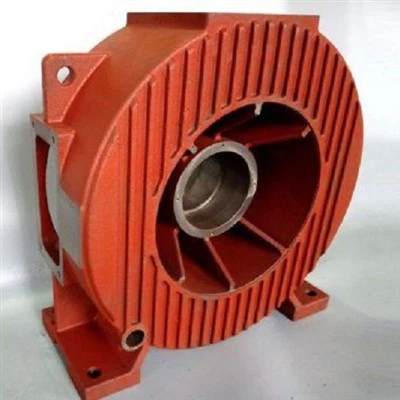
Now, let's talk about the specific components that make up these gas - liquid separators. One important component is the Pump End Cover. The pump end cover helps to seal the pump and prevent any leaks. It also provides a mounting point for other components and helps to direct the flow of the gas - liquid mixture into the separator.
The Centrifugal Impeller is another crucial component. In a centrifugal separator, the impeller is responsible for spinning the gas - liquid mixture at high speed. The shape and design of the impeller can greatly affect the efficiency of the separation process. A well - designed impeller can ensure that the gas and liquid are separated quickly and effectively.
The Centrifugal Pump Casing also plays a vital role. It houses the impeller and provides a path for the gas - liquid mixture to flow through. The casing is designed to minimize turbulence and ensure that the flow is smooth, which helps in the separation process.
Let's take a closer look at how these components work together. When the gas - liquid mixture enters the pump, it first passes through the pump end cover. The end cover directs the mixture towards the impeller. The impeller then spins the mixture at high speed, creating a centrifugal force. As the mixture spins, the liquid is forced to the outer edges of the casing, while the gas moves towards the center. The separated gas is then removed through a gas outlet, and the liquid is discharged through a liquid outlet.


In a gravity separator, the process is a bit different. The mixture enters the separator chamber through an inlet. The baffles inside the chamber slow down the flow, allowing the gas to rise to the top and the liquid to settle at the bottom. The gas is then removed from the top of the chamber, and the liquid is drained from the bottom.
It's important to note that the efficiency of a gas - liquid separator depends on several factors. The design of the components, the flow rate of the mixture, and the properties of the gas and liquid all play a role. For example, if the gas has a very low density and the liquid is very viscous, it might be more difficult to separate them.
As a pump components supplier, we understand the importance of high - quality components in ensuring the proper functioning of gas - liquid separators. We offer a wide range of pump components, including those mentioned above, that are designed to meet the specific needs of different applications. Whether you're in the oil and gas industry, chemical processing, or any other field that requires pump gas - liquid separation, we've got you covered.
If you're in the market for pump components for your gas - liquid separator, we'd love to talk to you. Our team of experts can help you choose the right components for your specific application and answer any questions you might have. Don't hesitate to reach out and start a conversation about your pump component needs.
References
- Perry, R. H., & Green, D. W. (Eds.). (1997). Perry's Chemical Engineers' Handbook. McGraw - Hill.
- Walas, S. M. (1988). Chemical Process Equipment: Selection and Design. Butterworth - Heinemann.