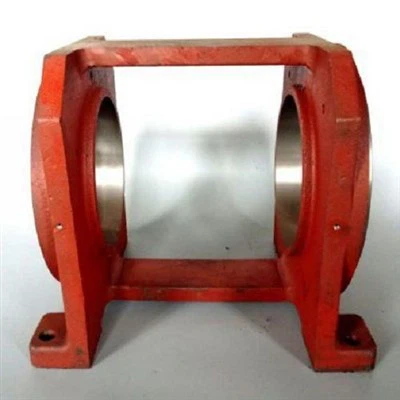
As a supplier of Pump End Covers, I've had the privilege of delving deep into the world of pump components. One aspect that often piques the interest of our customers is the magnetic properties of a pump end cover. In this blog, we'll explore these properties in detail, understand their significance, and how they relate to the overall performance of a pump.
Understanding the Basics of Magnetic Properties
Magnetic properties refer to the way a material responds to a magnetic field. There are three main types of magnetic materials: ferromagnetic, paramagnetic, and diamagnetic. Ferromagnetic materials, such as iron, nickel, and cobalt, are strongly attracted to magnetic fields and can retain their magnetization. Paramagnetic materials are weakly attracted to magnetic fields, while diamagnetic materials are repelled by magnetic fields.
The magnetic properties of a pump end cover depend on the material used in its construction. Most pump end covers are made from metals, which can exhibit different magnetic behaviors. For example, if a pump end cover is made from a ferromagnetic material, it will be strongly attracted to a magnet. This property can be useful in certain applications, such as when the pump end cover needs to be securely attached to other components using magnetic forces.
Importance of Magnetic Properties in Pump End Covers
The magnetic properties of a pump end cover can have a significant impact on the performance and functionality of the pump. Here are some key reasons why these properties are important:
1. Sealing and Alignment
In some pump designs, magnetic forces can be used to ensure a proper seal between the pump end cover and the pump casing. By using a ferromagnetic material for the pump end cover, it can be attracted to a magnetized surface on the pump casing, creating a tight seal. This helps to prevent leaks and improve the overall efficiency of the pump. Additionally, magnetic alignment can help to ensure that the pump end cover is correctly positioned, reducing the risk of misalignment and potential damage to the pump.


2. Maintenance and Assembly
Magnetic properties can also simplify the maintenance and assembly process of a pump. If the pump end cover is magnetic, it can be easily removed and reinstalled using a magnetic tool. This can save time and effort during maintenance procedures, especially in hard-to-reach areas. Moreover, magnetic components can be quickly and accurately aligned during assembly, reducing the chances of errors and improving the quality of the final product.
3. Detection and Monitoring
Magnetic properties can be used for detection and monitoring purposes. For example, sensors can be used to detect changes in the magnetic field around the pump end cover. These changes can indicate issues such as wear, damage, or misalignment. By monitoring the magnetic properties of the pump end cover, operators can detect potential problems early and take appropriate action to prevent further damage.
Factors Affecting the Magnetic Properties of Pump End Covers
Several factors can affect the magnetic properties of a pump end cover. These include:
1. Material Composition
The type of material used in the pump end cover plays a crucial role in determining its magnetic properties. Ferromagnetic materials, such as iron and steel, have strong magnetic properties, while non-ferromagnetic materials, such as aluminum and brass, have weak or no magnetic properties. The choice of material depends on the specific requirements of the pump application, including the operating environment, temperature, and pressure.
2. Heat Treatment
Heat treatment processes can also affect the magnetic properties of a pump end cover. For example, annealing can reduce the internal stresses in the material and improve its magnetic properties. On the other hand, quenching can increase the hardness of the material but may also reduce its magnetic properties. The heat treatment process should be carefully selected to achieve the desired magnetic properties while maintaining the mechanical properties of the pump end cover.
3. Surface Finish
The surface finish of the pump end cover can also influence its magnetic properties. A smooth surface can reduce the magnetic resistance and improve the magnetic coupling between the pump end cover and other components. Conversely, a rough surface can increase the magnetic resistance and reduce the effectiveness of the magnetic forces. Therefore, it is important to ensure that the pump end cover has a smooth surface finish to optimize its magnetic properties.
Applications of Pump End Covers with Magnetic Properties
Pump end covers with magnetic properties have a wide range of applications in various industries. Here are some examples:
1. Chemical and Petrochemical Industry
In the chemical and petrochemical industry, pumps are used to transfer various fluids, including corrosive and hazardous chemicals. Pump end covers with magnetic properties can be used to provide a secure seal and prevent leaks, ensuring the safety and reliability of the pumping system. Additionally, magnetic sensors can be used to monitor the condition of the pump end cover and detect any potential issues.
2. Food and Beverage Industry
In the food and beverage industry, pumps are used to transfer liquids such as milk, juice, and beer. Pump end covers with magnetic properties can be used to ensure a hygienic and leak-free pumping system. The magnetic forces can help to keep the pump end cover in place and prevent contamination. Moreover, magnetic sensors can be used to monitor the quality of the pumped liquid and detect any foreign particles.
3. Pharmaceutical Industry
In the pharmaceutical industry, pumps are used to transfer drugs and other pharmaceutical products. Pump end covers with magnetic properties can be used to provide a sterile and contamination-free pumping system. The magnetic forces can help to maintain the integrity of the pump end cover and prevent the entry of bacteria and other contaminants. Additionally, magnetic sensors can be used to monitor the flow rate and pressure of the pumped liquid.
Conclusion
The magnetic properties of a pump end cover are an important aspect to consider when selecting a pump component. These properties can have a significant impact on the performance, functionality, and reliability of the pump. By understanding the basics of magnetic properties, the factors that affect them, and their applications, you can make an informed decision when choosing a pump end cover for your specific application.
If you're interested in learning more about our Pump End Covers or have any questions about their magnetic properties, please don't hesitate to contact us. We're here to help you find the right solution for your pumping needs. Whether you need a Centrifugal Impeller or a Centrifugal Pump Casing, we have a wide range of high-quality pump components to meet your requirements.
References
- "Magnetic Materials and Their Applications" by J. M. D. Coey
- "Pump Handbook" by Igor J. Karassik, Joseph P. Messina, Paul Cooper, and Charles C. Heald